Roof Restoration · Six guides · Sheet 4
Rainwater · NSW Health and Your HomeRainwater from a roof
What reaches a rainwater tank depends on what is on the roof. NSW Health names lead flashings, lead washers on roofing screws and old high-lead paint, and the Australian Government’s Your Home guide names lead flashing and pre-1980 paint, as things to deal with on a roof that supplies drinking water; and the first rain after a dry spell washes dust, leaves and bird droppings off the roof, which is what a first flush diverter is for.
General information, not health advice. In NSW, NSW Health’s rainwater tanks page is the place to check; elsewhere, your state or territory health department.
The roof is the first part of the water supply
Your Home describes a rainwater harvesting system in four parts: the roof and gutters; the collection system of downpipes, leaf-shedding rain-heads and first flush diverters; the tank; and the supply system, which may include a pump and filters. This guide is about the first two.
- 1The roof surface. Your Home says to avoid collecting drinking water from roofs painted with pre-1980 paint; NSW Health’s example of high-lead paint is pre-1970s paint.
- 2Flashings and screws. NSW Health advises replacing lead flashing and roofing screws with lead washers with non-lead alternatives, such as aluminium flashing or plastic washers, or painting over them where they cannot be replaced.
- 3Solar panels. Net the gaps between solar panels and the roof so birds cannot nest under them.
- 4Overhanging branches. Remove them, to keep animals and birds off the catchment and their droppings out of the water.
- 5Rain-head and first flush diverter. A leaf-shedding rain-head screens out leaves; a first flush diverter stops the first runoff from the roof entering the tank.
- 6The tank. Its inlet and overflow should be screened, with fine insect-proof mesh such as 1 mm, against animals and mosquitoes.
What the roof needs, by what the water is for
Your Home says most kinds of roof can supply rainwater, depending on how clean the water needs to be, and builds its advice in three steps, each adding to the one before.
| Water for | What Your Home asks of the roof and gutters |
|---|---|
| Garden and lawn | Any roof material except unsealed asbestos; gutters that fall towards their outlets; preferably an effective leaf screen on the gutters; gutter outlets fitted to the underside of the gutter. |
| Other uses | Also: no vegetation hanging over the roof; clean the roof and gutters before the system goes in; a good-quality leaf screen on the gutters, or a leaf-shedding gutter. |
| Drinking | Also: don’t collect from sections of roof that have lead flashing or asbestos sheeting, or from roofs with paint dating from before 1980; and avoid areas with airborne toxins from nearby activities such as crop-dusting and chemical processing. |
Where lead flashing or old paint cannot be avoided, Your Home says to seal it properly by preparing the surface and painting it with a suitable potable-quality roof sealant, and not to collect water from the first few rains after sealing. An asbestos cement roof is a different matter: any work on one is asbestos work, and what the rules say about asbestos comes first. If the sheeting is in good condition, the national asbestos agency’s advice is not to disturb it. It also says it is “not recommended that you handle or remove asbestos yourself”, and in some places the law goes further: in the Australian Capital Territory any removal needs a licensed removalist, unless it is part of minor routine maintenance or other minor work, and in Queensland a home owner must be trained before taking out more than 10 square metres of non-friable material, and only a removalist holding a Class A licence may remove friable material. The agency adds that asbestos waste must go to a landfill licensed to accept it.
For new roofs the National Construction Code is plain: “no lead materials can be used on roofs that form part of a drinking water catchment area”.
Letting the first rain go
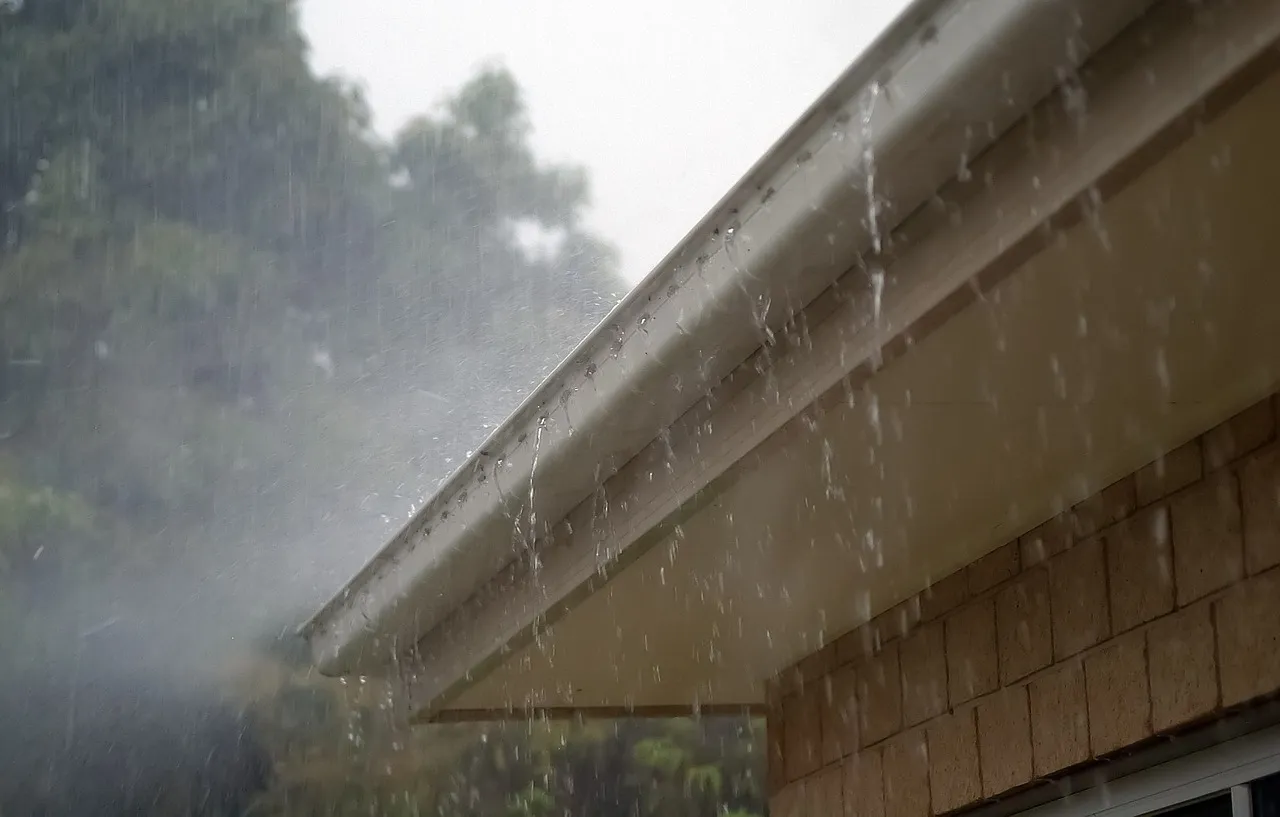
NSW Health says the first water to run off a roof when it rains brings down most of the dust and leaves that have built up on it. A first flush device catches it before it reaches the tank, and is usually fitted on the downpipe between the gutter and the tank inlet. Your Home says diverters should be installed for all drinking water systems, and that local government may require one.
Many diverters empty themselves but still need care. NSW Health’s routine is to empty the device after each rainfall so it can catch the next first flush, and to clean it now and then by removing the end cap, rinsing the bottom cap, clearing the weep hole, rinsing the filter and ball, and putting the ball back in the downpipe before the cap.
Two rules of thumb from Your Home: diverters are typically sized to divert about 10 litres per 50 m² of roof, and 1 mm of rain on 1 m² of roof gives 1 litre of water. For a roof of 150 m² that drains to the tank:
- Diverted first, 150 ÷ 50 × 10 L
- about 30 L
- 10 mm of rain, 10 × 150 × 1 L
- about 1,500 L
The roof size is invented for the example; real yields depend on the roof and the system.
Bushfire smoke and ash
A bushfire is nearby
NSW Health says ash and debris in rainwater are unlikely to be a health risk, but could affect how the water looks and tastes. Its steps for when a fire is near and after it, from its rainwater and bushfires fact sheet, in its order:
- If there is a bushfire nearby, disconnect the downpipes from the tank.
- If the water tastes, looks or smells unusual, or you suspect it is contaminated, use an alternative safe supply, such as bottled water, for drinking, preparing food or ice, cleaning teeth and for animals, until the tank can be cleaned and refilled.
- After the fire, disconnect the downpipes if you haven’t already, and if the roof hasn’t been cleaned, let the first rain after the fire drain away rather than into the tank.
- Clear ash and debris off the roof, “if this can be done safely”.
- Check the roof and gutters for dead animals and remove any you find.
- Testing the water usually isn’t needed, because contamination is usually obvious.
- A contaminated tank should be emptied, cleaned and filled again. Working inside a tank can be very dangerous, and some areas have professional tank cleaners.
- Debris can affect filters and other treatment equipment: check the equipment’s manual or ask its supplier.
- Once drinking water has been captured or delivered, flush the taps in the house to bring through the new clean water from the tank.
Before anyone goes up
Cleaning the roof is on NSW Health’s list only “if this can be done safely”. Safe Work Australia says: “Working at heights is a high risk activity, and a leading cause of death and serious injury in Australia.”
After the roof: pipes, taps and testing
- Pipes, timber and spray drift. NSW Health’s rainwater tanks page also covers the grade of plastic pipe to use, treated timber on the catchment, and what to do if the house is oversprayed by crop dusting.
- Run the tap first. NSW Health suggests letting a rainwater tap run for 10 seconds first thing each day, and for at least 2 minutes when it has gone unused for more than 48 hours, because that first flow can carry more lead and copper from plumbing fittings. It can still be used for washing up or watering plants.
- Testing is rarely needed. NSW Health says a householder should not need to send tank water to a laboratory, and that removing sources such as lead flashings from the catchment should manage chemical risks without testing. Your local Public Health Unit can help find an accredited laboratory if you want one.